

 February 3, 2026
What Happens to Your Kidneys in Chronic Kidney Disease (CKD)? A Simple Explanation
Chronic Kidney Disease (CKD) is a long-term condition where the kidneys gradually lose their ability to function properly. Because this decline happens slowly, many people do not notice symptoms in the early stages. Understanding what actually happens inside the kidneys can help patients and families recognize why early care and lifestyle management are so important. Learn more in our ayurvedic treatment of kidney diseases.
The Role of Healthy Kidneys
Your kidneys are two bean-shaped organs located in the lower back. Though small, they perform several life-sustaining tasks:
- Filtering waste products from the blood
- Balancing fluids in the body
- Regulating electrolytes like sodium and potassium
- Helping control blood pressure
- Supporting red blood cell production
Each kidney contains about a million tiny filtering units called nephrons. These structures remove waste and excess water, which leave the body as urine.
What Changes in Chronic Kidney Disease?
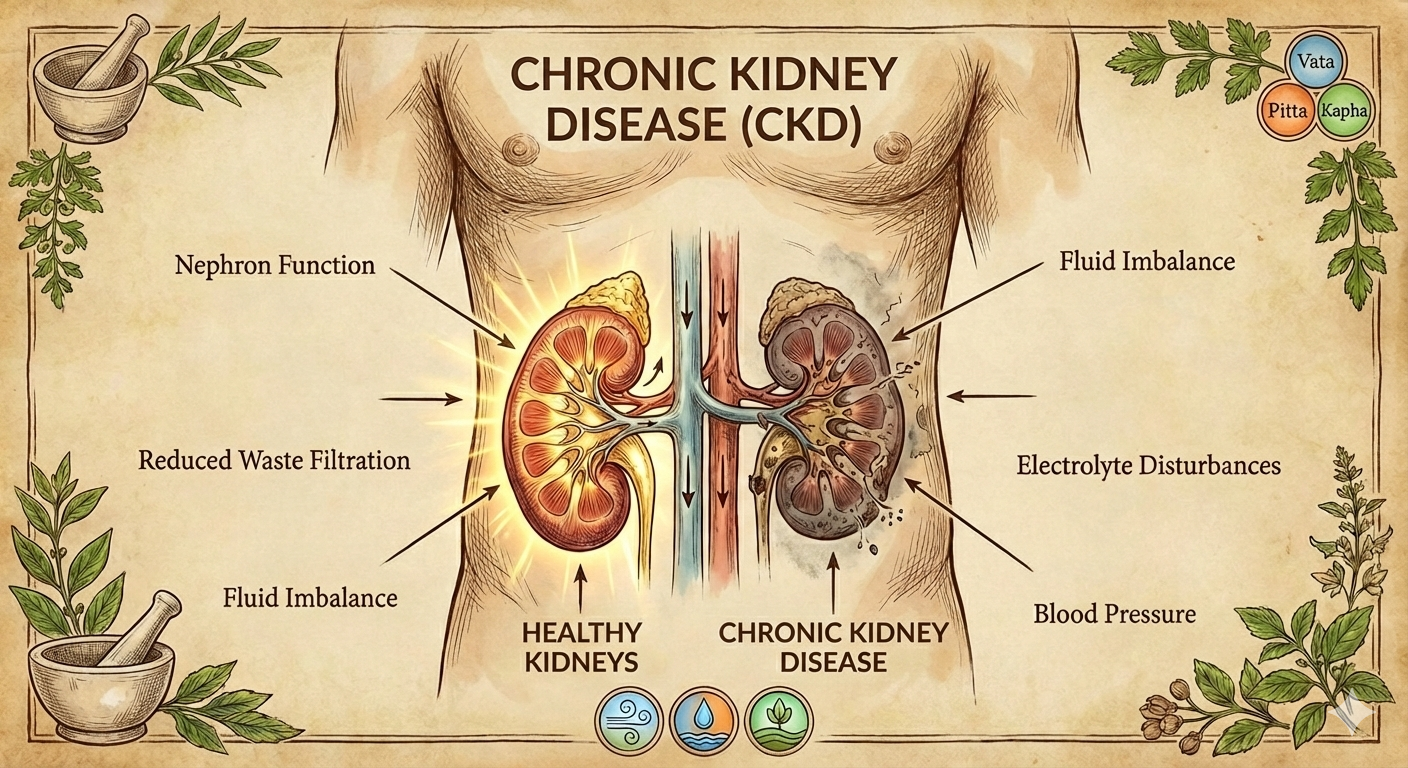
In CKD, kidney damage occurs over time. This damage reduces the number of working nephrons. As fewer nephrons remain healthy, the kidneys cannot filter the blood as effectively.
1. Reduced Waste Filtration
When kidney filtering slows down, waste products such as urea and creatinine start to build up in the bloodstream. This can lead to symptoms like fatigue, nausea, and reduced appetite in later stages.
2. Fluid Imbalance
Healthy kidneys maintain the right balance of fluids. In CKD, excess fluid may accumulate, which can cause swelling in the legs, ankles, or face and may strain the heart and lungs.
3. Electrolyte Disturbances
The kidneys regulate important minerals like potassium, sodium, and phosphorus. Kidney dysfunction can lead to abnormal levels, which may affect the heart, bones, and muscles.
4. Blood Pressure Effects
The kidneys help regulate blood pressure through hormone control and fluid balance. CKD can both cause and worsen high blood pressure, creating a cycle that may further damage kidney tissue.
5. Hormonal Changes
Damaged kidneys produce fewer hormones involved in red blood cell formation and bone health. This can lead to anemia and bone-related problems over time.
Why CKD Progresses Slowly
CKD is often called a “silent condition” because symptoms may not appear until significant damage has occurred. The remaining healthy nephrons try to compensate by working harder, but this extra workload can eventually cause further decline.
Common Causes of Kidney Damage
- Diabetes (high blood sugar over time)
- High blood pressure
- Long-term inflammation
- Recurrent kidney infections
- Certain medications when misused
Early Awareness Matters
Although CKD may not always be reversible, early identification can help slow progression. Monitoring blood tests such as creatinine and GFR (glomerular filtration rate) gives doctors an idea of how well the kidneys are working.
Supportive approaches including balanced nutrition, lifestyle changes, and appropriate medical care can play an important role in protecting remaining kidney function. Traditional systems like Ayurveda also emphasize systemic balance and urinary system support, but such approaches should be considered alongside professional medical guidance.
Key Takeaway
Chronic kidney disease is a gradual loss of kidney filtering ability. As kidney function declines, waste builds up, fluid balance is disrupted, and hormonal roles are affected. Understanding these changes highlights why early testing, awareness, and consistent care are essential for long-term kidney health.
Explore our Ayurvedic kidney treatment options for personalized guidance.









Truly inspiring! Ayurveda has changed my life for the better.