


 February 7, 2026
Ayurvedic Approach to Chronic Kidney Disease (CKD)
Chronic Kidney Disease (CKD) is a progressive condition that affects the kidneys’ ability to filter waste and maintain internal balance. Millions of people worldwide live with CKD, often relying on long-term medications, dietary restrictions, or dialysis as the disease advances. Ayurveda offers a holistic perspective—one that focuses on the root imbalance within the body rather than treating the kidneys as an isolated organ. Learn more in our natural and herbal treatment for kidney disease.
Chronic Kidney Disease: A Modern Medical Overview
From a modern medical standpoint, CKD is defined as a gradual decline in kidney function over months or years. Common contributing factors include diabetes, high blood pressure, autoimmune disorders, chronic infections, and prolonged use of certain medications.
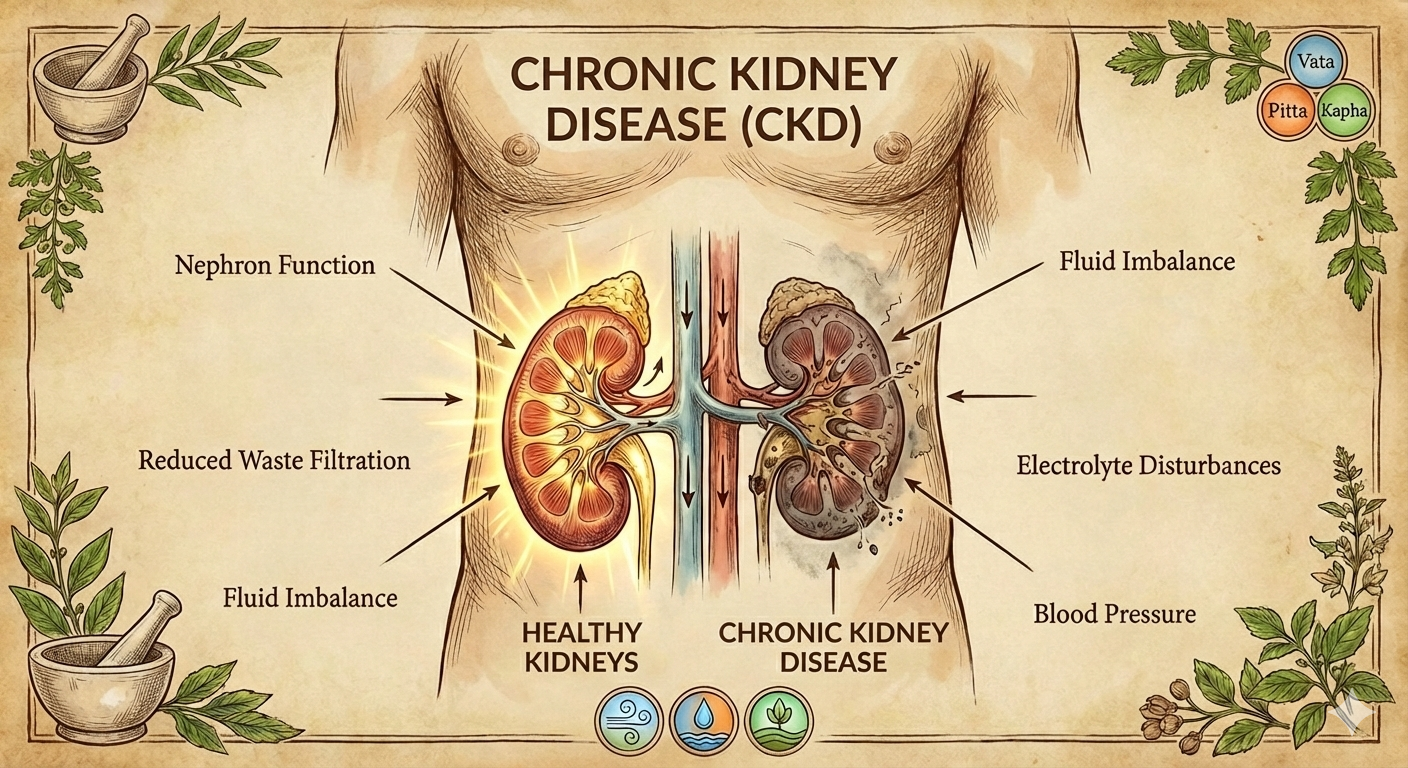
The kidneys are responsible for:
- Filtering toxins from the blood
- Regulating fluid and electrolyte balance
- Maintaining blood pressure
- Supporting red blood cell production
When kidney function deteriorates, waste products begin to accumulate, leading to fatigue, swelling, appetite loss, and metabolic imbalance. You can explore a detailed medical explanation at National Kidney Foundation.
How Ayurveda Understands Kidney Disorders
In Ayurveda, kidney-related conditions are linked to dysfunction of the Mutravaha Srotas (urinary system) and imbalances in Vata and Kapha dosha. Rather than labeling CKD as a single disease, Ayurveda views it as a long-term systemic disturbance.
Key contributing factors described in Ayurvedic texts include:
- Accumulation of Ama (metabolic toxins)
- Weak digestive fire (Mandagni)
- Improper dietary habits
- Chronic stress and lifestyle imbalance
Over time, these factors obstruct natural elimination pathways, leading to deeper tissue damage—including the kidneys. Scientific discussions on Ayurvedic physiology can be found at PubMed Central.
Why Ayurveda Focuses on the Root Cause
Conventional medicine often focuses on controlling symptoms such as blood pressure, blood sugar, and electrolyte imbalance. While these measures are essential, they may not address the internal dysfunction that initiated kidney damage.
Ayurveda aims to improve metabolic efficiency, reduce toxin accumulation, support remaining kidney function, and enhance overall quality of life through a balanced and sustainable approach.
Personalized Assessment in Ayurvedic Care
Ayurvedic management is individualized based on body constitution (Prakriti), stage of kidney disease, digestive strength, and the presence of associated conditions such as diabetes or hypertension. This personalization allows care to be adapted to the patient rather than forcing the patient into a fixed protocol.
Diet and Lifestyle: The Foundation of Kidney Health
Diet and daily routine play a central role in Ayurvedic kidney care. Heavy, processed, or incompatible foods are believed to overload digestion and increase toxin formation.
Ayurveda generally emphasizes light and easily digestible meals, reduced salt intake, avoidance of processed foods, adequate hydration tailored to the individual, and a disciplined daily routine to stabilize Vata dosha. Global health organizations also recognize lifestyle modification as a key factor in managing kidney disease, as noted by the World Health Organization.
Scientific Interest in Ayurvedic and Integrative Approaches
In recent years, there has been increasing scientific interest in traditional medicine systems for chronic diseases. Several observational studies suggest that integrative approaches may help improve symptom burden and patient-reported outcomes when used responsibly under expert supervision.
An overview of research trends in traditional medicine is available at NCBI.
A Responsible and Integrative Path Forward
Ayurveda does not advocate abrupt discontinuation of conventional treatment. Instead, it supports a complementary and integrative approach guided by qualified professionals. At Atharv Veda, the focus remains on patient safety, ethical practice, and long-term health improvement.
Conclusion
Chronic Kidney Disease is a complex and life-altering condition. Ayurveda provides a broader lens—addressing digestion, metabolism, lifestyle, and internal balance. When approached responsibly, it can play a meaningful role in improving quality of life for individuals living with kidney disorders.
Explore our kidney disease care options for personalized guidance.








Truly inspiring! Ayurveda has changed my life for the better.