


 January 29, 2026
Ayurvedic Diet for Kidney Disease Patients
Managing kidney disease often requires careful attention to nutrition, digestion, and lifestyle. From an Ayurvedic perspective, diet plays a central role in supporting balance within the body and reducing unnecessary strain on the kidneys. Learn more in our kidney disease treatment approach.
This article provides an educational overview of how traditional Ayurvedic dietary principles are commonly applied in the context of kidney disease, alongside modern medical care.
Understanding Kidney Disease and Nutrition
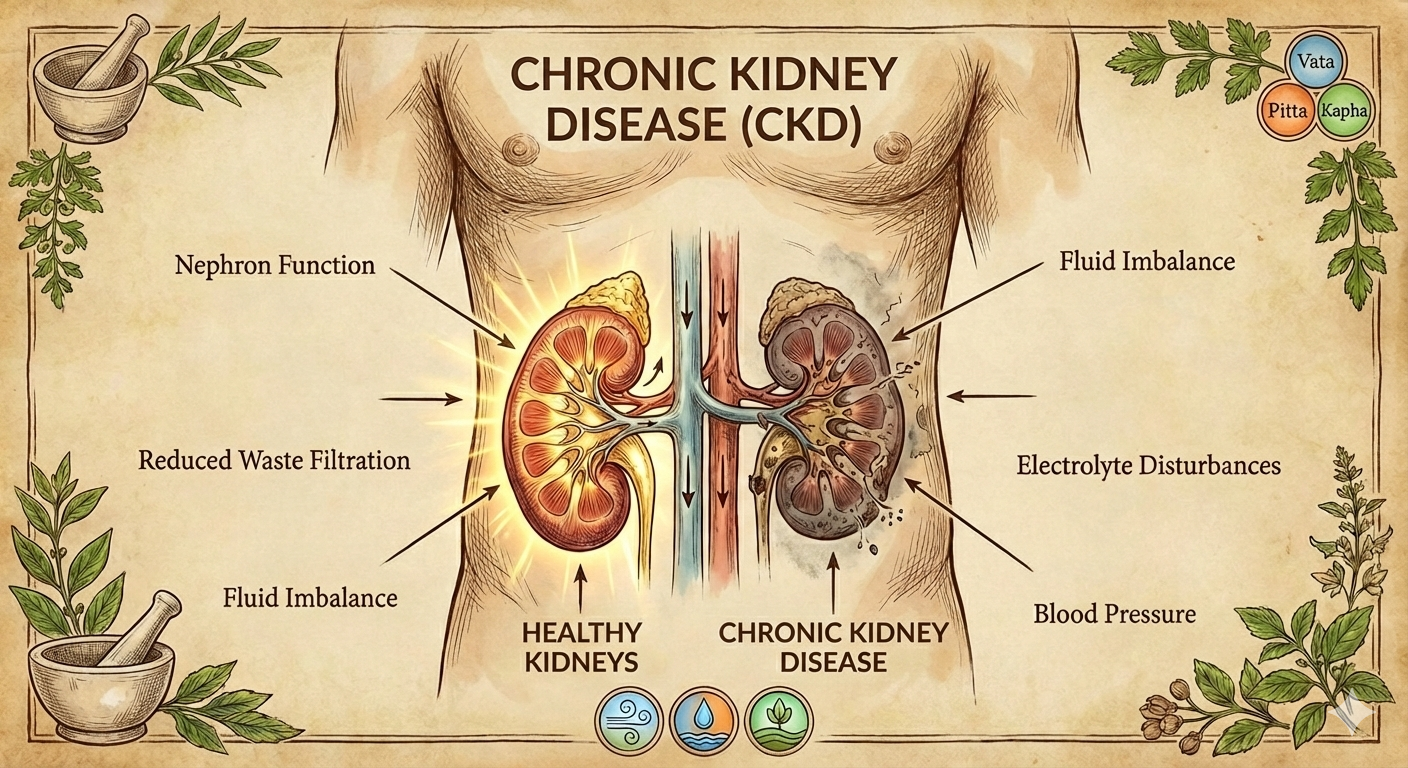
Kidney disease affects the body’s ability to eliminate waste and regulate fluid and mineral balance. Conditions such as chronic kidney disease (CKD) may progress slowly, and dietary habits can influence how the body copes with metabolic stress.
In Ayurveda, improper digestion is believed to contribute to the accumulation of metabolic waste (Ama), which may impact overall health. Supporting digestion through appropriate food choices is considered an important aspect of holistic care.
Ayurvedic Perspective on Diet and Kidney Health
According to Ayurvedic principles, kidney-related disorders are often associated with imbalances in Kapha and Vata dosha. Heavy, excessively salty, or processed foods may aggravate these imbalances.
Dietary recommendations in Ayurveda focus on simplicity, moderation, and digestibility. The goal is not to treat kidney disease directly, but to support overall metabolic balance.
For a broader understanding of holistic care approaches, readers may explore this detailed guide on ayurvedic treatment of kidney diseases.
Common Ayurvedic Dietary Principles for Kidney Disease
Ayurvedic dietary guidance for kidney disease patients may include:
Emphasis on freshly prepared, warm meals
Limiting excessive salt intake
Avoiding highly processed or packaged foods
Choosing foods that are easy to digest
Maintaining adequate hydration as advised by a healthcare professional
Foods are typically selected based on individual constitution, digestive strength, and stage of illness.
Foods Often Considered Supportive
Traditionally, Ayurvedic practitioners may recommend foods such as:
Light grains like rice or barley
Cooked vegetables instead of raw salads
Mild spices to support digestion
Adequate but controlled protein intake
These choices aim to reduce digestive burden while maintaining nourishment.
Lifestyle and Eating Habits
In Ayurveda, how food is consumed is considered as important as what is consumed. Eating at regular times, avoiding late-night meals, and maintaining a calm environment during meals are commonly emphasized.
Gentle activity, adequate rest, and stress management are also considered supportive practices.
Limitations and Medical Supervision
It is important to note that dietary changes alone cannot reverse kidney disease. In advanced stages, medical interventions such as dialysis or transplantation may be necessary.
Ayurvedic dietary guidance should always be followed under professional supervision and alongside regular medical monitoring.
When to Seek Professional Guidance
Individuals with kidney disease should consult qualified healthcare professionals before making significant dietary changes. Personalized care is essential due to differences in disease stage, overall health, and nutritional needs.
For clinical evaluation and personalized support options, visit Ayurvedic kidney treatment options.
Medical Disclaimer
This content is intended for educational purposes only and should not be considered a substitute for professional medical advice, diagnosis, or treatment. Always consult qualified healthcare providers regarding kidney disease management.
Explore our kidney health consultation for personalized guidance.






Truly inspiring! Ayurveda has changed my life for the better.